Foreigners and English Football
Should being 'English' be the benchmark?
Looking forward to next season’s title race, my Arsenal-fan cousin swears that his team are in with a shout. I take his claims like I do my chips, with a pinch of salt. “They need a big man in the middle. They mess about with it too much. Almunia’s hair is rubbish,” are my usual responses. He starts to explain his reasoning and although I’m not really listening, one name does break my glazed look. Andrei Arshavin.
Hearing his name brings back stark memories of that breathtaking 4-4 Premier League game in April when Arsenal turned up at Anfield with a one man band. The 27-year-old put on the finest solo performance I’ve witnessed since I saw some little Russian fella run the Dutch ragged at Euro 2008.
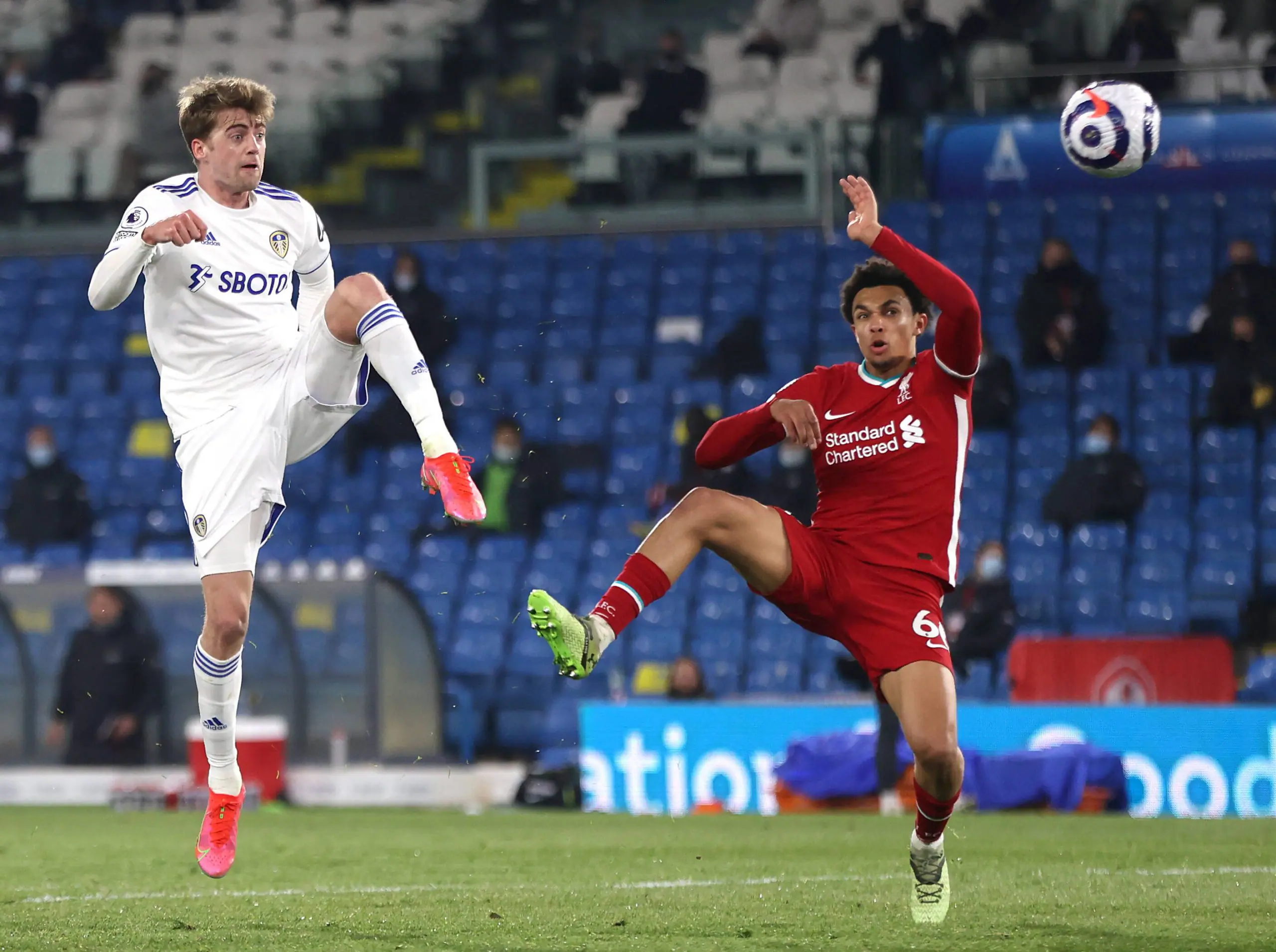
Liverpool’s 4-4 draw with Arshavin that night had everything a contest between two of the so-called-top-four should; quality, drama, excitement, late goals and world class players on show. What it didn’t have, was a single England international in either starting line-up.
That may not be, and probably isn’t, a big surprise. In the Premier League these days, foreign players outnumber English players quite significantly. But is this a big a deal?
Sepp Blatter, President of FIFA believes a change is crucial in order to restore national identities of football leagues, make European competition more competitive and also help national teams by promoting the playing chances of native youngsters. Sepp’s plan is to limit the amount of foreign players a team are allowed to field. Many people agree with his principal intentions. Many people don’t.
Blatter would like to implement ‘the 6+5 rule,’ meaning a team could only field five ‘foreigners’ in their starting line-up. UEFA currently impose a foreign-quota rule, whereby 8 players from a squad of 25 must be ‘home-grown.’
The terms ‘home-grown’ and ‘foreigner’ are grey areas. Throw in nationalised players, places of birth, passports, grand parents and fairy god-mothers and you have a whole new set of arguments. Interestingly, last season, Portugal’s Cristiano Ronaldo and Spain’s Cesc Fabregas were classed as home-grown players whilst playing for Manchester United and Arsenal, respectively. This is because they were trained at their English clubs for at least 3 years between the ages of 16 and 21. Home-grown they might be, but eligible to play for England they are not, unless they apply for nationalisation – another issue close to Sepp’s heart.
Blatter again stamped his feet, this time about the number of players taking on foreign citizenship and then appearing for their new countries in international games. He highlighted Brazil as chief culprits, even claiming that half the players at the 2014 World Cup could be Brazilian born. Therefore, another FIFA proposal aims to make nationalisation much more difficult.
The powers that be may have football’s interests at heart but their propositions are far from cut and dry. Stirringly, although unlikely, it is entirely feasible that a team like Arsenal, with their policy of buying young players from all around the world, could easily fulfil the home-grown rule without actually fielding a single Englishman. It is also possible that these players could ignore or be ignored by their motherlands, choose to become nationalised and represent the England team – next stop, square one.
For some football fans, biennial international tournaments might be their most realistic chance of supporting a team to honours and so any notion that may improve their national side’s chances would be welcomed.
Michel Platini, Johan Cruyff and England vice-captain, Steven Gerrard are all high profile advocates of introducing a cap on foreign players, believing that the England team will benefit the most.
Of all Europe’s top footballing nations it may be no coincidence that current World Cup holders, Italy, have the lowest percentage of foreigners playing in their top tier. (World Cup runners-up, France, are second, followed closely by European champions, Spain.) The Premier League has the highest.
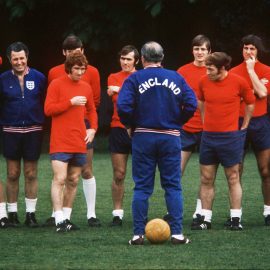
So how did England fare internationally when there weren’t as many ‘foreigners’?
But regarding England’s ineptness at major tournaments, can we really lay blame at the feet of Vidic, Essien, Van Persie et al? For 53 years, England have been serial underachievers. Since 1966, there have been 10 European Championships and 10 World Cups. England failed to qualify for 6 of those tournaments, and of the rest, can only point to two semi-final appearances as highlights.
Interestingly, before 2008, the last time England failed to qualify for a major tournament was for the World Cup in USA in 1994. Qualifying for that tournament began in 1992, a year when just over 20% of Premier League players were non-English, compared to the 63% foreigners that appeared in the opening day line-ups for 2007/08.
The point is that we botched qualification to USA’94 when foreign players were a rarity rather than a majority.
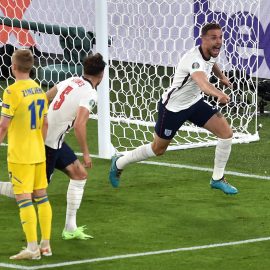
Considering England’s current form (under a foreign manager, no less) can it not be argued that it may even be the continental skills and tactical nous of the foreign contingent that are having a positive effect on our National side? A 100% record in the qualifying campaign thus far and 7th in the FIFA world rankings, one place behind Argentina and 3 ahead of recent World and European Champions, France. At this moment in time, the current England side is strong and it is competing.
Perhaps it’s not actually top-class players such as Essien and Van Persie that the typical England fan has a problem with; but rather the ‘average’ foreign player blocking the progressive path of our youngsters. But right now, a club manager could pay over the odds for a young Englishmen here or he can get a better or equal player overseas for less money. Transfer dealings are part and parcel of good management and any rule aiming to cap the amount of foreign players in a team will only serve to add to an English player’s already inflated value.
If foreign players are good enough to be bought, then they are good enough to play. If we were to argue that only the best foreigners should play and the rest should either step up or ship out, then surely it would be fair to aim that same argument at the young Englishmen failing to dislodge them from the team.
The reason the 2014 World Cup may display over 50% of Brazilians is because there are plenty of them good enough to play. For kids, growing up in the drug-run shanty towns of a country afflicted so heavily by poverty, football provides a passion in a life containing little else; a far cry from the majority of Britain’s youth, where many rotund teenage boys spend their weekends playing football on the Xbox instead of on the field.
To improve the level of domestic talent in England, the FA must continue to place emphasis on grassroots football. If applied successfully, being coached from a young age will prepare a player, both technically and mentally, for the competitive nature of a professional club. Indeed, if lucky enough to make the grade, these young Pro’s should be embracing the competition for places, be it from a foreign player, an established England international or one of their peers.
The path to the first team could be made a little easier by taking away some of the obstacles (in this case, foreign players) but will this really help the player in the long run? Would this not be akin to lowering grade requirements for wannabe students so that it’s easier to get into a university? It’s a false economy.
Reducing the number of foreigners in the Premier League will ultimately lower the standard of the football being played, so how can that possibly help the international players who play in it every week? Arsene Wenger, a critic of the foreign quota proposal, argues that, ‘If you put the level of the class down, it does not necessarily make the bad students better. It makes them worse.”
If the future of English youngsters becomes dependent on our club’s sacrifice of top players, and maybe risk the future success of our chosen colours, would the fans accept it? Should we dilute the weekly showpieces of high octane, top class football every week in order to see if our national team could surpass the efforts of the previous 53 years?
The pool of talent that Fabio Cappello has to choose from is not Olympic-sized, but it’s certainly no puddle. The players at his disposal are of proven quality because they’ve pushed their way through the system of their respective clubs and are competing amongst the rigour of the bustling, pacey, unforgiving, multicultural Premier League.
Competition drives the desire to improve and trying to succeed beyond what you’ve mastered is the key to development.
The ugliest problem of the modern game is that of money. For the time being this doesn’t look like changing, therefore big clubs will always have first pick of the best young footballers; either through their own elite academies or by throwing the highest amount of money into their pockets. Perhaps a cap on salary, prize funds and TV revenue would be a more effective solution to the problems outlined by Mr. Blatter.
Until the day a new system is put in place, small clubs will continue to rely on clever management, fine scouting, tactical nous, decision making, hard graft, extra training, quick thinking and individual brilliance in order to bridge the gap between themselves and bigger clubs. The game of football as it should be.
For the average English football fan, there’s really nothing much to complain about. England are playing well with high hopes for South Africa 2010 and the future certainly looks bright after the Under-21s showing in the European Championships this year. The Premier League and Champions League are as entertaining as they’ve ever been, providing moments of brilliance on a consistent basis.
If foreign quotas were imposed, then the big boys of English football might become less untouchable, adding a more competitive edge to the league. European competition might become more open and entertaining, displaying much stronger national identities. England might produce better players for the national team and they might eventually win something again. And everyone might live happily ever after.
There are simply no guarantees. So, if I was pushed to give my opinion, possibly stemmed from my fondness for familiarity or maybe just my indolence, I’d be happy to leave things as they are; because as the old adage almost goes, ‘If it’s working alright, don’t meddle’.


I read a lot of football articles and this provides a well balanced, informed and humorous argument towards a controversial topic. I look forward to reading more of your work.
I remember all the furore over Sven Goran becoming England manager. Half the press wrote headlines as though the whole fabric of our society was disintegrating. Now, a few years on, the whole nation and each of the tabloids cried out in unison for Capello to come and rescue us from McClaren’s turmoil. Things become normalised in such a short space of time these days that perhaps its only a matter of time until we field 2 or 3 foreigners in our national side. Our cricket teams have been doing it for years. 2014 – Rooney slides Macheda through to score the winner for England! We’d all soon overlook his passport issues.
I don’t know, the quality of the players in the England side is immense, players like Lampard, Gerrard, Rooney, Ferdinand and Terry could walk into any side in the world, so I don’t see how you can say that foreigners are making English players rubbish :\ after all the few english players in the prem are playing with and against some of the best talent in the world, so I guess that can only be god for them….
As long as there is a free market in football and there are no restrictions to the amount of foreign players per team, the premiership will be swamped with overseas players. This will have a detrimental affect on the English national team as home grown players won’t break through. Only a world wide rule on the amount of overseas players would solve this.
Very balanced analysis Gary, well thought out. Protecting domestic players artificailly would make everyone worse off in the long-run.
u nicely forgot that both Kieran Gibbs and Theo Wallcott played in the anfield thriller and surprise surprise they played for arsenal. Nobody saw that tho
i find your column very well written gary. in the case of foriegners helping, wenger is the greatest example. not only has he raised standards but he has improved the youth system at arsenal and now has an array of ENGLISH talent bursting through, with wilshere heading the cue. it shows that you are right and that more foreigners can make english players truly fight for what they deserve
I’ve never bought into this ‘detrimental affect on the national team’ thing. Go back 40 or 50 years when it was all home grown players. What did you have? A couple of dozen players good enough to play for England, plenty of decent players and some very average ones.
Foreigners may take up places that average home based players might have had in some teams but the top players of international quality will always emerge. The suggestion that a world class home grown player may be lost to the country through not getting a game because some foreigner was playing ahead of him is complete nonsense.
The cream rises to the top and if you’re good enough you’ll make the breakthrough, regardless of acadamies, ‘modern’ coaching techniques, special diets and all that goes with the myth of the modern game.
How on earth did Charlton, Best and Law make it without being weaned in an academy from the age of 7 etc.etc.
I never could quite figure that out!
Brilliant piece.
The following English palyers were on parade in the Liverpool vs Arsenal Match:
Liverpool – Jamie Carragher
Arsenal – Kieran Gibbs and Theo Walcott
Thanks for your comments, much appreciated.
Regarding the English players on show in the 4-4 game. Carragher and Gibbs started, the only current English international to play was Walcott, who came off the bench. Cheers.
Mr Toal,
I have found this article exceptionally interesting and my own opinion has wavered and swayed through several of your points. I will keep an eye out for, look forward to and I’m sure, thoroughly enjoy your future articles.
For the record I also agree with your opinion that foreign quotas would merely lower the standard of the game in England.
What I find strange is that players such as Beckham, Gerrard and Lampard prove consistently outstanding for their clubs even in comparison with their foreign teammates, especially in the vital moments (Think Lampard in the FA cup final this season, Gerrard on several occasions, and Beckham proving himself with Man Utd, Real Madrid and AC Milan, arguably the biggest clubs in each of their respective countries) yet come the major England games have a tendency to fail to produce their best form…
While no doubt at times England’s exits from some of the more recent tournaments have been brave performances (2008, 2006, 1998, 1996, 1990) I think that ultimately it is the British mentality of ‘It doesn’t matter where you finish as long as you’ve tried your best’ that holds this country back, and the perhaps the winning mentalitys of the Capellos of this world may finally bring about a change in this, I’d certainly say the ruthlessness shown in this qualifying campaign is encouraging but it wont be until the last 8 of the world cup that we’ll know for sure!
UEFA/FIFA is trying to nationalize clubs which is INTERNATIONAL. And FIFA is trying to internationalize nations. If I wanna watch a bunch of Englishmen I’ll watch international football. But now FIFA is allowing those under-23 to switch nations while trying to restrict club soccer to a more nationalist restriction. Its completely hypocritical.
Again national teams are NATIONAL teams while clubs are clubs. Clubs are a product, a market so its fine to be international.
Plus these restrictions are pointless because if the clubs want they simply will leave FIFA and UEFA and w/e else. And make the G14 or just a new FIFA.
In my few years on planet earth, my thoughts and opinions have been shaped by so many, especially great men of time. In particular, Martin Luther King Jr has influenced my philosophy tremendously. Others are John Kennedy, Robert Kennedy, Jesse Jackson and MalcolmX to mention but a few.
I have been so inspired by them so much so that their words have become part of me that they often found expression in my speech and writings, without necessarily referencing them sometimes.
One of the profound truths that I have
The English players who featured that night were Carragher,Gibbs and Walcott.It is a matter of shame that only 3 players featured in a top flight match-up.And this is also not a very good sigh for the future of English Football.More English players should be played!
Good article but the best way to look at why the national side is so unsucsessfull is to study the economics behind everything.First off the name says it all : “premier league”
it is not an english league because it is made of of multiple nationalities.Secondally football clubs are really corporations made up of share holders,whose loyalty is not to the national side and locals but to the club itself.What is happening in the modern world is that more and more english based clubs are being put under foreign ownership,owners who promise big things and potential but again with no loyalty to the national side.Infact it does not matter if the owner or manager is foreign or not because it is the policy of the club,how it is to be developed that will in the long run determine if it benefits english football itself.If the owners and the manager decide to look to the youth system and build that way it encourages local development.But what alot of clubs are now doing (like man city) is buying foreign established stars on the continent for quick short term sucsess.Now supporters of the premiership and media hype constantly states that this will benefit our young players but what is really happening? It prevents an english based player from getting into the starting lineup,sometimes even the bench depriving them of experience and so these young players tend to eventually go to smaller clubs where they can develop properlly,but if they go to smaller clubs they are no longer playing week in week out with the worlds best are they?.If these players do eventually become promising you can bet an elite club come knocking and this prevents smaller clubs from building and holding onto their own stars.The true state of english football is beyond the premiership because most englsih players are in the lower divisions and these lower league clubs are often overlooked by the premiership sides and even the rest of europe when it comes to transfers.The problem is that we are importing huge numbers of foreign players and not exporting any of our own.It is no coincidence that the other europeon leagues like the spanish, have high numbers of homegrown players in their top division,a high number of stars abroad and a sucsesfull national team in comparsisson to England where our top division is increasing with foreign players while homegrown numbers are decreasing,we have very very few english players playing for foreign clubs especially in the top divisions as there is no demand for them and we have what we see as a underachieving national squad.If we exported enough players then we would benefit because these players would gain vital experience and it would give wave after wave of younger generations a chance to come through the ranks which is why national sides LIKE brazil,like spain,like france are so strong.The assumption that the premierleague is the best league in the world and benefits the national side is garbage.Look at brazil,they are highly regarded as the best footballing nation on the plenet in terms of what they produce and yet their league does not have as much money or attract elite europeon players.They have many sucsesfull players based in europe and have a strong national squad.The reason being?the clubs in brazil all have a youth based system of development and high number of sucsesfull exports.This constant flow means generation afetr generation will come through with out competition for places with someone from abroad.What is happening here at home means our boys are having to wait ,face being loaned out to lower sides and most will remain in the lower divisions unwanted.The premier league may well have the most money invested in it above other leagues and attract a large number of big names but that does not represent how good english football is.It just shows that our clubs are desperate to find sucsess no matter the cost.Trophies and television money is their bottom line not the sucsess of the english national team.
As a dedicated football spectator for 46 years, I think they only way “England” can win a major competition is down to two things.
Scrap the current sytem of international matches and replace it with the leagues of each country. On second thoughts perhaps FIFA could instigate this as yet another way of making money.
On a serious note, I feel it is down to the training of youngsters wean them away from this pc world. During my teens, I often played 3 competitive games a week, 2 weekly training sessions and plus school sports lessons.
I am a firm believer in the maxim “GET FIT or GET FAT!”
Has you stated though all the best teams in the world already have a far higher percentage of national players in their domestic leagues, I don’t think this is no fluke its just with more players getting first team football improves them in ways that playing for the youth or reserve team will never do.