Apr
9
2009

Saving Soccer in a Football World

Written by Alan Worrall

usavguatemalatlc_ah3rmm1l
Altidore is the future of American soccer

Trolling the site for some interesting articles to read recently, I came across Ahmed’s article from the fourth of July of last year (side note, probably not the best day to write the article, Ahmed!). Having read the responses to the article I can see that most were negative, and so I decided to do my best to put forward some constructive criticism and make some of my own suggestions that would benefit the game in the US, that is, as opposed to just saying they suck and leaving it at that.

I’ve been most interested in the MLS and football in the US for several years now. And I’ve done some research. From reading into the history of the game stateside, to managing in the MLS in the Football Manager series, I’ve gotten an overview and I think I can make some informed offerings. So here they are:

1. DROP (OR REDESIGN) THE DESIGNATED PLAYER RULE

Designed solely to allow David Beckham to play in a league structured around the strict control of players’ wages, the rule has had only one beneficial impact: the arrival of some household names to make the game more attractive both within and outside of the United States. The problem with this however, is that most of the arrivals are either players well past their prime looking for one final payday (read: Freddie Ljungberg) or players who were once considered ‘the next big thing’ and failed to make it (read: Denilson and Claudio Lopez). With the exceptions of Juan Pablo Angel (quite possibly still in his prime based on recent form) and Cuauhtémoc Blanco, none of the players who have arrived under this ruling have made any real impact. Instead they marginalise the Americans playing in the squad who earn up to ten times less than these so-called superstars.

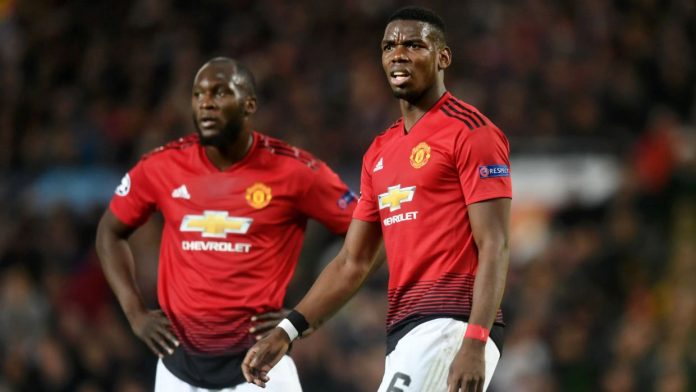
The solution that the MLS bigwigs have dreamt up to improve the quality of players in the league is in fact the opposite of what they should be doing. A revision of developmental contracts and indeed most senior contracts to ensure that young Americans coming into the league are appropriately recompensed is the clear way forward for MLS. Without this, the best young American players will continue to leave the country or take up a different sport in which they can earn far more money. It’s no coincidence that the country’s best and brightest have been seeking pastures new in far greater numbers over the past few years. Last year saw Jozy Altidore, Brad Guzan and Maurice Edu among others leave MLS, and none have made a particularly strong impact at their new clubs. But the fact is that they earn far more money than they did with their old ones.

2. ENCOURAGE MORE AMERICANS TO RETURN HOME

This rather goes hand in hand with dropping the designated player rule. I welcomed the decisions by Seattle and San Jose respectively to bring Kasey Keller and Bobby Convey to MLS and this needs to be done with far more aplomb in the future. Not all Americans make it abroad (note that I am not including Keller in that statement). Look no further than Landon Donovan. MLS should offer an attractive alternative to playing reserve team football in Europe. Indeed players such as Michael Bradley and Kenny Cooper also made the decision to move home. While the clubs in the MLS are clearly making improved efforts to bring these players in, more should be done to make playing in the MLS seem more of a natural choice than last resort.

3. DON’T ATTEMPT TO ‘AMERICANIZE’ THE SPORT

It’s a sad but true fact that corporate America tend to Americanize almost all popular forms of entertainment imported from around the world. The film industry are the worst culprits – remaking French and British films like it’s going out of fashion, take a note Hollywood; it’s rarely been IN fashion, but this has existed within football since the days of Pele. Cheerleaders, extravagant half-time shows and penalties from the halfway line don’t improve the standard of the game. Departing from the official FIFA rulebook only stands to make the game within America more of a laughing stock; something that thankfully MLS seems to have realised with the book being followed quite closely in recent years. But it’s important that this is the status quo and MLS doesn’t resort to deviating from what most of the world recognise as the modern game in order to draw in a few more punters.

4. INVEST IN GRASS ROOTS

From grass roots to the national team, the game needs this natural progression just as badly in the United States as it does in the United Kingdom. For models of this sort of thing in action, look no further than Brazil in South America and Spain in Europe, where emphasis is placed on the development of the under-17, under-19, under-20 and under-21 squads right up to the full team. It’s hardly a coincidence that both nations’ international sides are currently so strong. While America offers entirely different routes in terms of the way in which promising young players develop, (i.e. playing for their high school team then going to college on a sports scholarship, then being drafted to the professional league) soccer is much lower on the pecking order both in high school and college when compared to the traditional ‘big three’; football, basketball and baseball. This comes despite the fact that the ’soccer mom’ phenomenon has been tremendously strong in the US for much of the past decade.

More structure, from kids playing little league, right through to the MLS, should be put in place to ensure much stronger interest from American youth in playing soccer professionally. I know that high school soccer teams are unlikely to ever usurp the basketball or football teams, and the same is true of college sides. But more can be done. This point is probably the most contentious; one could argue that there’s simply no point given that more young Americans will grow up wanting to play gridiron, basketball or baseball. But at the very least the USSF could take a more active interest in getting kids to take up the game instead, surely?

5. INVESTIGATE THE POSSIBILITY OF A LEAGUE PYRAMID

Along the same lines as point 4, MLS should work more closely with the USL (United Soccer Leagues). Promotion and relegation are cornerstones to the game throughout the world. America (together with Canada) has the size and wealth to incorporate a league pyramid system encompassing at least three or four divisions. Why not at least consider the possibility? Promotion and relegation dogfights would at the very least provide something for the fans to sink their teeth into, and the traditional American sports system of the playoffs can easily be found in leagues throughout Europe, consisting either of a solely promotion playoff or a promotion/relegation playoff. This could easily be incorporated into the American game too.

The benefit of a pyramid not only potential excitement for fans but would also counteract the somewhat elitist attitude of MLS, where potential sides are forced to jump through many hoops just to set up a franchise and even then there is no guarantee. While these hoops are designed to ensure that the teams and owners behind them potentially entering MLS have long-term plans, there are many sides already playing in the USL who have been around for many years with solid fan bases. Indeed, before Seattle joined MLS another version of the Sounders had been kicking around the USL for a few years. Many of the candidate cities for the 2011 expansion already have sides in the USL. Why force them to essentially recreate themselves when the teams are already there?

So there are my five points. I’ve tried to think them through as carefully as I can. But I know people will find holes in my logic somewhere. I do truly have the best interests of the game at heart however, so be gentle!


This week's Soccerlens Podcast covers Henry's handball, the wonders of horse placenta and big match previews for this weekend. Check it out here.


Topics: Features, Lists, MLS


Discussion - 17 Responses

  1. you say your interests are in scottish and us leagues. if you dont like football, just tell us!!!

  2. Promotion/relegation ain’t gonna happen. No way the teams’ owners will ever agree to that. Far too big of a financial risk.

  3. You erroneously stated that Michael Bradely moved back to the US to play. Unless something happened in the last couple of days, he’s still playing for Borussia Monchengladbach in the Bundesliga, and starting regularly for their first team if I remember correctly.

    While I agree with the upside of a relagation/promotion system, I think you need to understand that the economics of MLS are done the way they are to try to ensure we don’t repeat the failure of the NASL. And I can’t imagine that AEG would be real happy having gone through all those hoops to get the Galaxy established in MLS, to then be replaced by the Charleston Battery, who didn’t go through any hoops, as a result of relegation/promotion. I agree that things need to change, but I don’t think its anywhere near a simple switch.

  4. Mr. Baker says “Promotion/relegation ain’t gonna happen. No way the teams’ owners will ever agree to that. Far too big of a financial risk.”

    The Promotion/relegation is going to happen but not the way you are affraid: NOT IN THE WAY DOWN, but in the way UP.
    If MLS grows so much that the only way to keep its eventual success (1 to 3 teams per city or whatever) is creating an UBERLEAGUE to which only the best of the bests qualifys. The owners won’t be too happy unless their teams go to that Super League, but it doesn’t challenge the current structure.

  5. 09/04/2009 The Red Jerk of BigSoccer

    Soccer doesn’t need saving [deleted]

  6. 09/04/2009 clarkfork

    1. sort of disagree. Whlie the DP rule doesn’t always work out, every player acquisition is a risk. And the fact is sometimes, it does work out as you pointed out. I would hesitate to even mention Beckham a faliure. We will find out for sure this year. LA’s attendance is way way down this year after leading the league. If their number jump back up when he returns, you will have your answer. I also think saying Frankie is past his prime with such conviction is awfully subjective. But I do agree the league needs to pay the players more to keep them at home.
    2. You are right on
    3. Disagre to some exent. I agree half time shows, cheerleaders, and stupid rules are all bad ideas. But we shouldn’t avoid an developing our own traditions and touch on the game, which willl come over time. Also, we shoudnt force Europe on the game as well.
    4.I don’t know enough about this to have an opinion
    5. Strongly disagre. The other posters have said it well. Can’t work.

  7. Mr. Baker – Relegation is a financial risk everywhere in the world. It doesn’t stop other leagues from using that system.

    Erik – Yes apologies for the Michael Bradley comment, I confused him with someone else whose name escapes me right now. I know who I meant, I think.

    Plus I did say to investigate the possibility. I realise it’s impossible to just say that as of next season whoever finishes bottom gets relegated. But I feel it’s worth looking into. Should the decision be that it’s totally unworkable then fine, but look into it at least. Thanks for your comments.

    Clarkfork – As for Ljungberg, he has been out of the game for a little while. It looked like he was done until the Sounders came knocking. If he’s being honest, what was the biggest attraction, the money or the chance to play in MLS? I honestly don’t know the answer, but I have my suspicions.

    And adding your own touch to the game is fine, I’d just be concerned if there was ever a return to the old penalty system or something along those lines. Like moving the games indoors or some such.

    Thanks for everyones’ comments. I appreciate the feedback.

  8. 09/04/2009 Bob Saccamano

    My biggest gripe with the MLS is the format of the league.

    Two trivial ‘conferences’ and the playoff system is exemplary of Americanizing the sport.

  9. 09/04/2009 Peter C

    1. I don’t have a problem with the DP rule. I do with the current salary cap. But that will require larger TV rights contracts. The 2 ‘big’ US rights contracts, ESPN and Univision, run through 2014, and I think much will depend upon the performance of the National team in 2010 and 2014.

    2. See #1. As others have commented, ’show me the money’.

    3. Let em do what they want at halftime. It’s on the pitch that will keep me or lose me.

    4. The grass roots are taking seed. As I see it, it’s like a jigsaw puzzle that hasn’t figured out what the final picture will look like. There are a load of youth clubs nationwide, the US Soccer Development Academy program now has over 70 teams, USL’s lower divisions, the Super Y and Super-20 have over 90 teams and PDL has over 60 teams. Throw in high school and college and there is a lot of organized youth soccer out there. Now are there enough good coaches? That’s another question.

    5. Maybe in 30 or 40 years. Not with the current economics(and I don’t mean the current financial crisis).

  10. 09/04/2009 Sheldon S

    And this is why the MLS will not grow because they are not willing to change I agree with all 5 points because they are so true and if there is no attempt made to implement at least 2 or 3 of them then there is no hope for the MLS ever establishing itself as a real FOOTBALL league and for christs sake get rid of the stupid conferences and have one league table like it should be JEEZ this is football not basketball or any other american sport that needs the damn conference system one league table means the teams al play each other and the teams with the most points at the end of the season is the true champion not a team that may barely make the playoffs with a terrible record but happen to get lucky and beat teams that are clearly better and win the title… Ridiculous

  11. @Alan – despite protests to the contrary, Americans rarely get sarcasm.

    The date was pure coincidence, and the ‘7′ reasons purely tongue-in-cheek.

    Screw relegation, what about reducing the distances clubs travel?

  12. Id love to see promotion/relegation as well and I think it will eventually be necessary primarily due to the size of the country. As MLS continues to expand and is heading in the direction of being a two country league it will eventually reach a point where there are simply too many teams for one league.

    Obviously as many have alluded to, this will not be for quite some time, at least 10-20 years Id imagine, but I think it will happen. The way I see it some sort of agreement would have to be reached between USL1/2 and MLS at least 5-10 years prior to the begining of a promotion/relegation structure. MLS will need to ensure that the USL leagues reach a designated number of teams and that they reach a certain level of financial success. In short the USL teams and leagues as whole would need to jump through some these “hoops” you guys are talking about before they would be given the chance to achieve promotion to MLS. Think of it as a way of continuing MLS expansion without adding more teams directly to the MLS table.

  13. @Bob and Sheldon:

    What then would you describe the Mexican league’s use of groups, playoffs, AND a split season? Mexicanizing the sport?

    There’s a lot of different ways leagues are organized across the world. Just because Europe does it a particular way doesn’t mean that’s the way it “should be.”

    As for the original article, points 3 and 4 are definitely ones to take on board. Point 2 probably doesn’t happen without the steps taken in point 4.

    I have mixed feelings about the designated player rule. Yeah, it allows you get a “name” that you can then pander to the Eurosnobs or the Mexican chauvinists, but as most of the MLS sies who’ve used it have demonstrated, it risks crippling your ability to field a complete team. I think there’s something to be said in the fact that successful teams like Columbus, New England, and Houston have not gone the DP route.

    As for the interminable debate over pro/rel, it’s never going to happen as look as television revenue is important to the future of the league. ESPN will never pay a rights fee without a New York team, and as much as I appreciate FSC’s single-minded focus on soccer I doubt they could pony up cash in quantities like the WWL can. Maybe that changes if PPV packages (like Direct Kick) and streaming video on the Internet (like MLSLive) become more important. But for now, television is still the 800-pound gorilla.

  14. Ahmed, I totally got that it was tongue in cheek. I did, I was amazed by the response and I started by just writing a comment back, but it grew into this. I for one enjoyed your article. ;)

    And you make a fair point. If you add up all the time MLS clubs spend travelling for games over the course of a season, how many times do you think they make it all the way around the world?

    That being said, the state championships in Brazil pretty much screw up the regular season. So there’s all the for and all the against I guess.

    And I agree with Jason. Conferences and playoffs are the American sports way of life. Football/soccer simply wouldn’t work without them. However, that doesn’t mean relegation and promotion couldn’t (POTENTIALLY) also be a part of it.

  15. Promotion/Relegation maybe should have been proposed from the start. But not now, it’s way too late. Go to a Charleston Battery game sometime this summer. Blackbaud Stadium is arguably the finest minor league soccer stadium in the southeast. Seats 5,000, draws about 3,000 consistently. Tell me how a promoted Battery team will suddenly be able to expand that stadium. They can’t. And tell me how a suddenly promoted Battery team will be able to draw another 12-15,000 people who didn’t support them to begin with.

    There’s a reason Vancouver, Portland, and Rochester are always touted as potential MLS cities (and I personally think Rochester SHOULD get to MLS). It’s because they draw much more than Charleston. That’s just a fact. There’s not enough cities to have a pro/rel system in America.

    Realities are to have a pro/rel system, you need about 36 stadiums that fits the MLS model upfront. Not going to happen. Taxpayers will not foot the bill for a pipedream that’s foreign to them. MLS opposes it, USL opposes it, it’s not happening.

    Now, if MLS and USL wanted to start a FUTSAL league in the winter (to further promote soccer), that CAN be set up as pro/rel rather easily, as you are looking to rent basketball venues to play futsal. It would be split to two conferences, teams only play in conference, the pro/rel applies to each conference. Maybe they could do that to see if pro/rel works in America.

    The attraction of MLS is parity. Seattle is having a great start this year and they are an expansion team. A pro/rel system benefits the richest clubs and handcuffs teams struggling to stay out of the drop zone. Anyone seriously think Man U, Liverpool, or Arsenel will ever get demoted again?

    Parity and playoffs is all the “Americanization” MLS needs. To me, they should shorten the season to a dual round robin (play a team only twice each), PAY players more, get rid of the designated player rules, offer team bonuses for wins, and increase the salary cap. I’d rather would have seen the money wasted on Beckham spread out to CONCACAF-based players for winning games.

    The idea that American players have to go to Europe (where there’s always an excuse not to play them) is laughable. We need our top players here promoting MLS.

  16. “Screw relegation, what about reducing the distances clubs travel?”

    What, by moving the cities? ;)

    The DP rule to me needs to be tweaked, not abandoned. Indeed efforts are rumored to be underway to allow an additional DP per club. The salary disparity is bad I agree but the new CBA should help even that out at least somewhat. Teams just need to do a better job of finding DP’s. Blanco and Angel and Schelotto have unquestionably added immesurably to MLS and that should be allowed to continue.

    Also, the oft repeated ad nauseum euro paranoia about the “americanization” of the game is just misplaced; the argument would have more legs were MLS still offering a countdown clock and shootouts (both of which were done away with years ago) …but it was the American fan who demanded those things be done away with and it’s the American fan who to this day continues to fight for things like more traditional league structure, balanced schedules (which is hard with the number of teams), and the like.

  17. Promotion/Regulation had to be proposed at the begining. Owners who paid a large entrance fee aren’t going to agree to let someone else just come up and take their place. It would be interesting to see it, but there’s just no way.

Developed by Football Media | All Content is under Copyright Protection | © 2006-2009 Soccerlens - Football News